Is MyOliveTree legit?
MyOliveTree (myolivetree.it) walks into this series carrying the thing almost none of its rivals have: a stack of real, recent, overwhelmingly positive customer reviews on an independent platform. It holds 4.9 out of 5 on Trustpilot from 113 reviews, 96 percent of them five star and, strikingly, zero one-star. In a category where the best-known names sit at 3.1 and 3.2 and the anonymous newcomers have no reviews at all, that record stands out immediately. So we did what we do with every strong first impression in this series: we tried to knock it down.
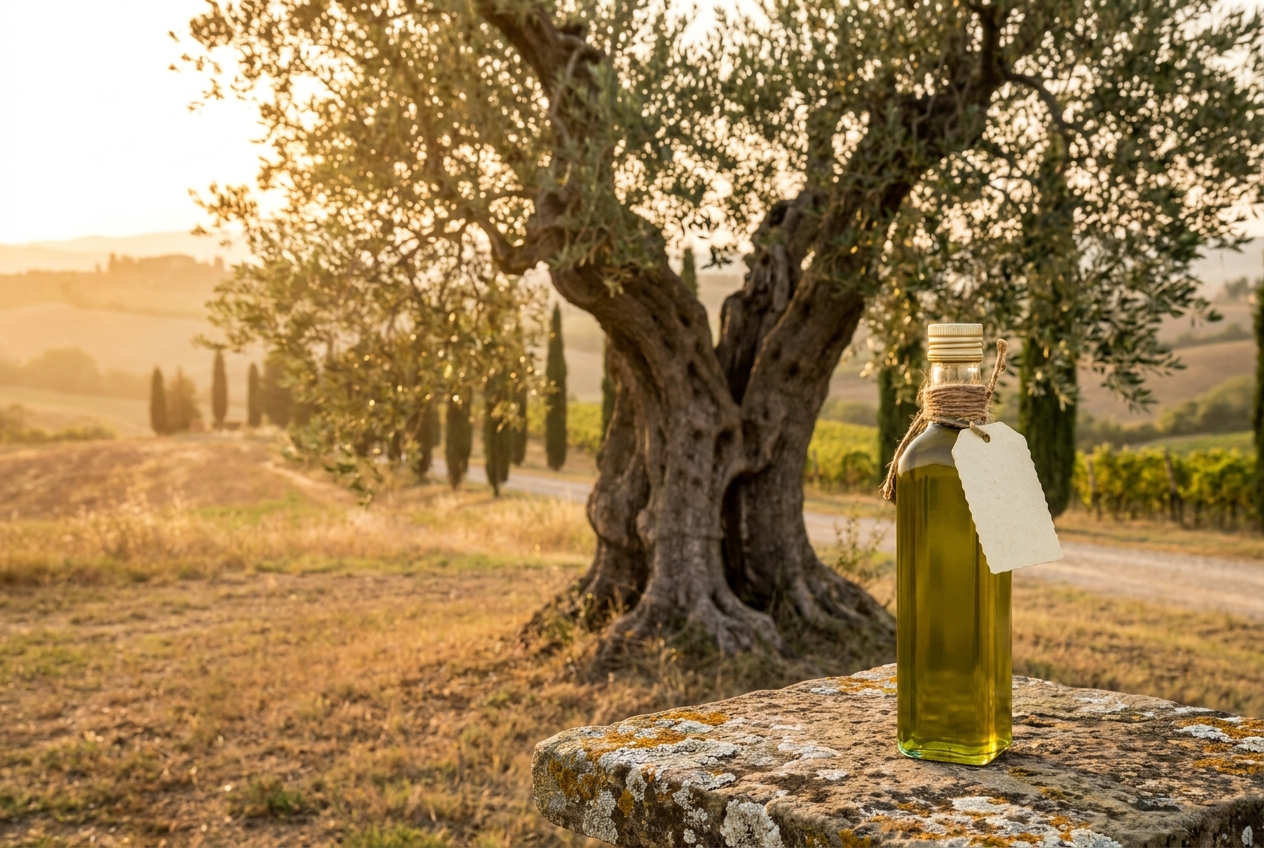
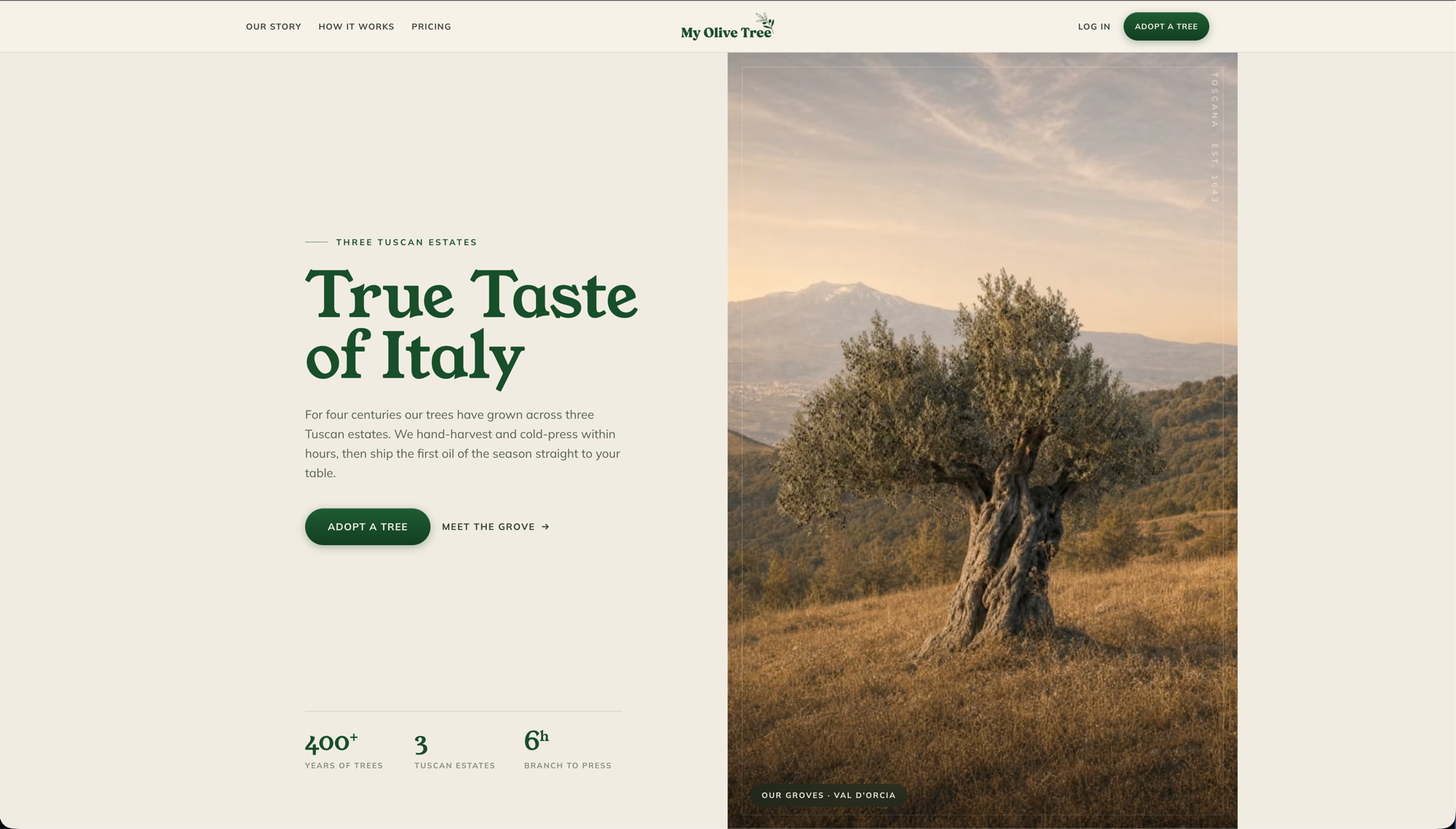
Start with what the site actually tells you, because it tells you more than most. The trees are in the Val d’Orcia in Tuscany, across three family estates the banner dates to 1643, with "400+ years of trees." The farmer is named: Tommaso Conti, a second-generation grower whose children built the online program around the family groves. That family is not just a line on the adoption page, and we come back to them below. The oil is a single-estate Frantoio monocultivar, described as certified organic extra virgin and lab-tested for acidity, peroxides and polyphenols, cold-pressed within hours of picking. Adoption runs in four tiers, from the $109 Young Tree (three bottles, roughly 1.5 to 2 litres) up through $249, $599, and a $999 Family Estate that ships eight trees’ worth of oil. Named farmer, named region, named cultivar, named certifications: on the checklist this series keeps returning to, MyOliveTree answers most of it on the first scroll.
Who are the Conti family?
The Conti name is the load-bearing part of the trust case, so it is worth dwelling on. Beyond the adoption program, the family runs a standalone olive-oil label, Conti, which sells "organic Italian extra virgin olive oil, grown and pressed by the Conti family" across the same three estates the adoption draws on: Podere Fontanella in the Val d’Orcia in Tuscany, Masseria San Michele in Puglia’s Alta Murgia, and Baglio Sant’Anna in Sicily’s Val di Noto. Tommaso Conti is the second-generation grower at its center, and the site walks through the whole chain the family controls, a ten-step run from "harvest, transport, de-leaf, wash, crush, malax, decant, separate, store and bottle," under a plain-spoken credo: "the oil comes first," and oil that is "made to be opened" rather than hoarded.
What that second site adds is numbers, and numbers are the hardest thing in this category to fake. Conti (contioliveoil.com) publishes lab figures for its oil: polyphenols around 655 to 684 mg/kg, free acidity of roughly 0.18 to 0.22 percent, and a peroxide value near 3.2 meq O₂/kg, the chemistry of a genuinely fresh, high-polyphenol extra virgin rather than a tired supermarket blend. Those are the same quality claims MyOliveTree makes for the oil pressed from your adopted tree, now attached to a separate, product-first storefront run by the same family. It does not age the two-month-old adoption domain by a single day, but it does answer the question that sinks most newcomers in this series: is there a real grower, with real oil and real numbers, standing behind the story? Here, plainly, there is.
The experience layer is genuinely modern, and it is the part reviewers keep singling out. You pick and name your tree on a virtual grove map, watch live sensor data from the grove, temperature, humidity, tree health and oil yield, as the season builds toward pressing, then receive bottles under your own custom label about ten days after harvest. One thing to be clear-eyed about: the tree you name lives on that digital map, not as a carved nameplate on a specific trunk. But the underlying groves are real and, unlike the "virtual grove" a rival in this series was caught selling, MyOliveTree says adopters are welcome to visit during the October–November harvest and meet the trees, the farmer and the place. A visitable grove with a real farmer is a different thing entirely from a computer-generated image of one.
Now the honest caveat, and it is the whole reason to read the fine print before you spend. The website is new. The domain myolivetree.it was registered on July 5, 2026, which makes it about two months old as we write, with its ownership hidden behind WHOIS privacy and no legal entity, company address or registration number published anywhere on the site, only an info@ email. Automated trust scanners like ScamAdviser score it near zero, but that is largely what those tools do to any brand-new, privacy-registered domain regardless of merit, so the flag is a reason to verify, not a verdict on its own. The tension worth naming plainly is this: the reviews are those of an established favorite, while the paperwork is that of a startup that launched this summer. Both things are true at once.
Our verdict: the best-reviewed program in this series, and one of the few with a named farmer, a named cultivar, certified-organic claims and a real, visitable Tuscan estate behind it. What it has not yet built is the boring institutional proof, a published legal entity, an address, a couple of years of trading history, that would let us recommend it without a caveat. If you are buying now, treat it as a promising newcomer with an unusually strong early record rather than a proven veteran: pay with a method that carries buyer protection, keep the harvest and shipping dates in writing, and ask them to name the certifying body for the organic claim. On current form, given how quickly reviewers say support replies, they will probably just tell you.